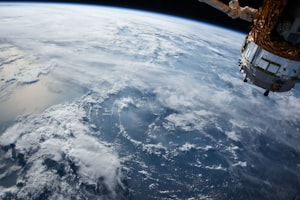
HOW MANY SATELLITES CAN WE SAFELY FIT IN EARTH ORBIT?
With the rapid deployment of mega-constellations like Starlink and Kuiper, space is becoming increasingly crowded. Experts warn of the Kessler syndrome, but new regulations are being formed to help manage this.Read article
A planned SpaceX Falcon 9 rocket launch carrying 11 satellite payloads for the Space Development Agency (SDA) on Friday morning was scrubbed just minutes before liftoff due to a technical issue. Teams are evaluating the data for the next launch opportunity.More
Following a lengthy weather delay, NASA and SpaceX are targeting no earlier than Monday, Oct. 21, for the undocking of the Crew-8 mission from the International Space Station, returning four astronauts back to Earth after a successful mission.More
The Space Development Agency is preparing for its third launch of the "Tranche 0" transport satellites, moving closer to an operational constellation that will provide critical communication capabilities for the military across the globe.More
The increasing diversity of satellites requires new processing manifests to handle the various types of data. These systems will streamline operations, allowing for more efficient data transmission and processing across the satellite network.More
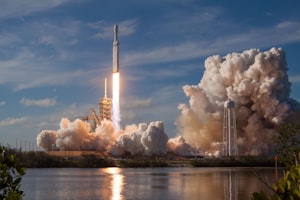
A SpaceX Falcon Heavy rocket rolled out to the launch pad at Kennedy Space Center ahead of a planned launch of NASA's Europa Clipper mission to Jupiter's icy moon, setting the stage for an unprecedented mission of discovery.More
The Space Force has selected two companies to build satellites designed to monitor space traffic and track other satellites in orbit, a critical capability for space domain awareness and national security.More
NASA and JAXA have agreed to extend the life of the Exposed Facility on the ISS. This extension will allow for more commercial payloads to be hosted on the station's exterior, significantly boosting capabilities.More
The Japanese HTV cargo spacecraft successfully berthed with the International Space Station on Thursday, delivering vital supplies and scientific experiments to the crew currently living and working aboard the orbital outpost.More
These are the objects our community follows most right now. Click "Track" on any row to open a live map, pass predictions and orbital data for that satellite.
Answers to the questions we get most often. If you still need help, send us a message below and we will reply within two working days.
Is SAT NAV SST free to use?
Yes. Live tracking, the ISS map and basic pass predictions are completely free and require no account. A free account simply saves your location and favourite satellites.
How many satellites can I track?
SAT NAV SST tracks more than 20,000 satellites and orbital objects in real time, including active payloads, rocket bodies and tracked debris.
Why does a satellite position sometimes jump?
Orbital data is refreshed several times a day. Between updates the position is propagated from the last known two-line element set, so small jumps can appear right after a fresh update.
How do I find the ISS in the sky?
Open the pass prediction tool, set your location and look for passes with a maximum elevation above 30 degrees. The ISS appears as a bright, fast-moving star that never blinks.
Can I use the data in my own project?
Yes. Our REST API returns positions, TLEs and pass predictions as JSON. Free keys are rate-limited; higher limits are available on request.
Do you store cookies or personal data?
No. This site sets no cookies and stores nothing in your browser. Your language choice and any form input stay only in memory for the current session.
Contact support
Login to SAT NAV SST
Access your saved location, favourites and pass alerts.
🔒Your credentials are transmitted securely and never displayed.
SAT NAV SST Satellite Tracking & Orbital Mechanics Library
Practical reference guides, orbital benchmarks, worked calculations, and verification checklists for live ISS tracking, TLE propagation, pass predictions, GNSS constellations, and space-weather workflows.